
One of the roles I value most at Brandesign is the responsibility for exploring emerging technologies. Tacking these on and translating them into practical value for our business and clients alike. It goes without saying that the past few years have been spent unpacking AI, specifically LLM’s and their use cases. The rise of Agentic AI conversations and adoption frameworks have been intriguing to say the least.
We know that, deployed well, these tools enable productivity, they create faster turnaround and facilitate space for increased strategic thinking. In our case, they have contributed to a 35% increase in team size, over just 18 months. This is not a boast, it is a view that we hold, AI should grow your team, not shrink it.
Automation should not replace thinking. Remaining a critical thinker is key.
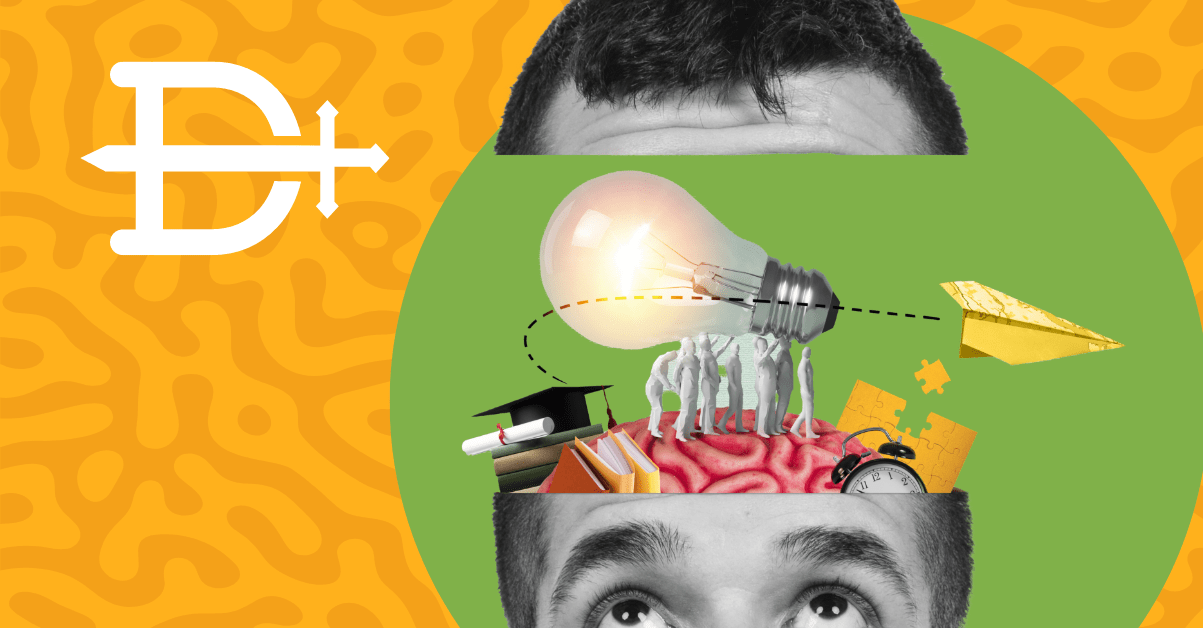
A recently resurfaced talk by Meredith Whittaker of the Signal Foundation reminded me of the tension many leaders feel. She argues that many of us are relinquishing our critical thought in the name of convenience. Challenging us not to “leave our brains in the jar”. I take it a bit further arguing that companies may find themselves filling up with jars, because they are not deploying the technology well. Businesses are understandably drawn to the efficiencies these systems promise, but without careful governance, we risk sliding toward over-automation.
Automation when applied to repetitive, low-value tasks is good for businesses and their teams. A risk emerges though when people and organisations start replacing the thinking portions rather than the repetitive tasks. Convenience and ease give rise to less thought and people who allow tools to do the reasoning inadvertently make themselves dispensable. In the same way, companies that attempt to automate judgement, deploy the technology incorrectly.
Misunderstanding AI-assisted writing is holding people back.
A recurring theme that is a worry for me is that the use of AI (LLM’s) in writing or ideation harms credibility. This is particularly problematic given the (mis)use of AI content detectors. These tools do not measure authorship at all. They simply flag patterns. A lesser-known fact is that coherent, structured writing, even when it has been entirely human generated, can trigger false positives.
This resultant anxiety inflected on people, who are doing exactly what effective use of AI is designed for, is palpable. Developing their thoughts and ideas, structuring their thinking and then using an LLM to improve clarity, should be the norm. Increasingly though, organisations across the spectrum are calling these pieces poor and devoid of value. This is an error that should and must be corrected.
Side Note: I hear people advancing arguments in support of detectors as protecting things like SEO. Search engines do not punish AI-assisted writing – fact Google’s guidance note is unambiguous. Ranking depends on usefulness, accuracy and relevance, not on whether AI contributed to the creation. This may change but for now this is the state of play. Here is another fact. Bad content performs poorly regardless of whether created by a person or a model. High-quality content performs well, regardless of the tools used to create it.
Critical Thinking and AI must co-exist
Agentic AI will raise the stakes, both positively and negatively. If we fail to govern it, then the doomsayers may have more cannon fodder, they would not be wrong. Agentic AI has the potential of cross platform action and not just generating text. Systems need to be developed to enable these safely, this outcome seems a long way off.
As we move into 2026, the organisations that will succeed will be those that use AI to enhance human judgement. They will be the companies that drive and not simply encourage deeper thinking. They will prioritise governance and reward strategic reasoning. They will be thinking companies, marked by leaders who are not afraid to have their thoughts challenged. Technology is advancing fast. Our thinking must advance faster. Use the tools. Just don’t lose the thinking.
Here is the challenge: Are you building a culture that uses AI as a tool, or are you quietly training your teams to put their brains in jars?
